Strategy & Leadership

Creative & Build

All services, one team

Not sure which service fits the problem?

Three questions. You'll know which service fits.

Take the diagnostic

Industries we serve

Featured industry case

+340% qualified leads.

Industrial equipment, twelve months. The strategy, the work, the math.

Read the case study

Industries · Marketing for Technical & Engineered Products

Marketing for technical and engineered products.

Consumer or B2B. Products that need education, explanation, and proof — from agricultural pest-control technology to lithium battery systems to powersports portfolios to consumer engineered products. Brands that earn buyers through how they explain what they make.

44.0582° N · 121.3153° WBend, Oregon Since 2006
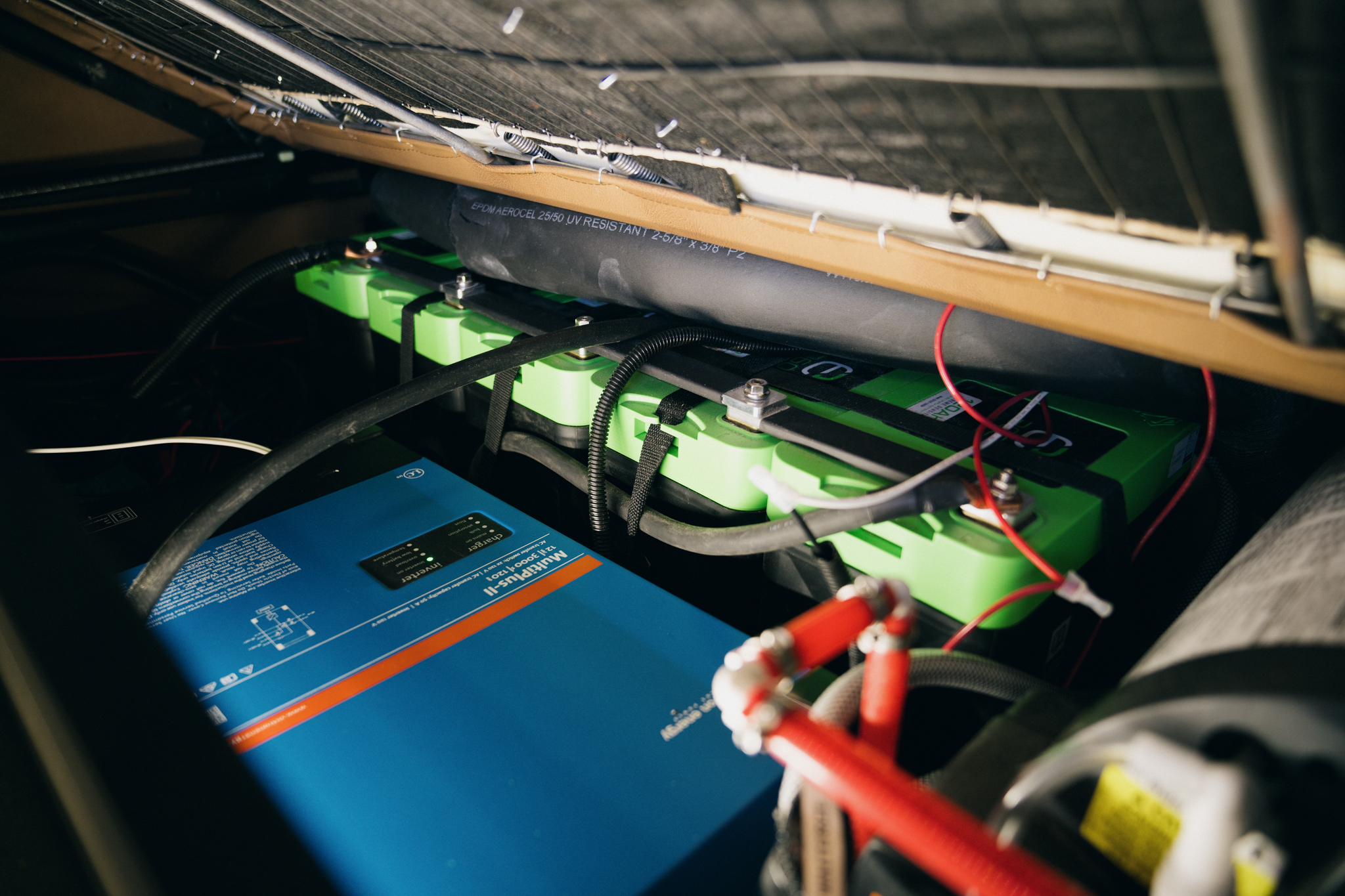
Expion360 multi-battery RV installation with Multiplus II inverter — technical product in real application context.
Lithium battery technology · technical product installation · Wild Pixel client photography

The space we work in

Technical products win on understanding, not impulse.

Technical and engineered products span a wider category than the label suggests. We use it to describe everything from a $40K capital equipment OEM to a $100 consumer novelty — as long as the product is engineered, requires education or training to use or sell, and competes in a market where buyers actually research before they buy.

What unites them: the marketing has to make the buyer understand the product. Not just see it — understand it. That's a different job than commodity DTC, where the marketing's job is to interrupt and convert quickly. Technical products require the marketing to teach, explain, and prove. The buyer who buys without understanding usually doesn't stay a customer.

We work in this category across consumer (pest-control technology, consumer engineered novelties, powersports portfolios) and B2B (lithium battery systems for RV and retail). Different price points, different sales cycles, different channel mixes — but the same fundamental marketing job: make the buyer understand the product before they're asked to buy it.

Part of our broader B2B marketing approach →

What this vertical looks like in our work

The pattern across technical-product engagements.

Technical products are our second-largest vertical concentration. Same playbook, adapted to the product shape and the buyer behavior.

4 named

Technical-product brands

Pest-control technology, lithium battery systems, consumer engineered products, powersports portfolios. Plus a half-dozen NDA partners across the same shape.

DTC + B2B

Channel range

Some sell direct to growers and through B2B distribution. Some sell direct and through retail. Some run pure dealer. Some launched DTC. We work across all of it.

$58K

Email rev / mo ceiling

From email lifecycle work for a national pest-control technology brand — revenue line that didn't exist 90 days earlier.

8.4×

ROAS ceiling in this vertical

Sustained year over year for a lithium battery technology brand across paid search and Meta. Up from 2.1× at engagement start.

Education

Marketing job #1

Across every technical-product engagement: the work is teaching the buyer what the product does and why. Spec sheets, video demos, comparison guides, application case studies.

Multi-platform

Channel mix

Most technical-product engagements run paid + SEO + content + email + lifecycle. Brand and photo+video usually included. The full stack moves the math.

Anchor clients

Where we've anchored in this vertical.

Four anchor partners across the consumer-engineered and B2B-technical spectrum — described by shape; named on the case-study pages and during the first conversation.

Plus a half-dozen technical-product brands we serve under NDA — described by category on relevant case study pages.

How we serve this vertical

Five things we know about technical-product marketing.

01

The buyer has to understand before they buy.

Marketing's job is teaching. Spec sheets, video demos, comparison guides, application case studies, ROI calculators. Buyers who don't understand the product don't become long-term customers.

02

Photography and video are the asymmetric advantage.

Most technical products are sold against competitors with stock photography and generic creative. Real product photography on real surfaces — with the operators, the installation, the application context — differentiates immediately.

03

Multi-channel buyer journeys are the norm.

Buyers research across paid, organic, social, and dealer/distributor sites before they buy. The attribution has to capture all of it. Single-touch reporting misses the actual sales path.

04

Lifecycle email moves the math.

For both DTC and B2B technical products, lifecycle email is one of the highest-ROAS channels. Cart abandon, post-purchase, win-back, and consideration-stage nurture all show up.

05

Brand consistency carries the whole funnel.

Voice and visual consistency across paid creative, organic content, email, and dealer materials matters more here than in commodity categories. The buyer is sizing up your credibility through consistency.

“The product is real. The brand around it doesn't carry the same weight. We need both to land at the same time.”

What we hear from technical-product brand owners

FAQ · Things people ask about us

Questions about how the shop runs.

If yours isn't here, the form is honest territory.

Start a ConversationGet in touch →
How big is the team?

We don't quantify team size on the site. The substance signal comes from the house numbers above — twenty years, $20M+ ad spend managed, 50+ partner companies, 100+ websites. That's how we feel real without claiming a roster. The structural commitment is "senior on every account" — whoever you talk to is the operator.

Are you a creative agency or a marketing agency?

Marketing agency, full stop. The creative capability is unusual for a shop our size, and it's the asymmetric advantage when the work pulls hard on it — but the lead is the marketing math. Strategy, paid media, SEO, content, lifecycle, attribution. Creative is a lever inside that, pulled when the math says it'll move the number.

What industries do you actually work in?

Industrial equipment OEMs, metal fabrication, technical and engineered products (consumer + B2B), and the broader manufacturing space. The common shape: complex, considered-purchase products with longer sales cycles, real competitive pressure, and strong margins. Not e-commerce commodity. Not lifestyle DTC. Not software-as-a-service.

Where are you based?

The team operates from the Pacific Northwest (44.0582° N · 121.3153° W). We work with clients across the US and a few international. Most of the work is remote-first; we travel to client sites for shoots, dealer meetings, trade shows, and quarterly reviews when the engagement calls for it.

Do you take on PE-owned companies?

Yes — we currently work with PE-backed industrial groups and have for years. The PE timeline isn't a problem; the work either compounds in a way that supports the exit thesis or it doesn't. We're built to make sure it does.

Are you hiring?

We hire infrequently and we hire carefully. If you're a senior strategist, designer, copywriter, or operator with deep product literacy in industrial / technical categories, the careers page has standing language — the door is open even when the postings aren't.

Start a conversation · 1-business-day reply

Are you marketing a complex product?

Twenty minutes. No deck. No discovery script. Tell us about the product, the buyer, and where the marketing is stuck — we'll tell you whether we're the right shop.

20+ years Senior on every account 1-day reply

Tell us what you're working on. We'll be back inside one business day.

Read by a senior strategist. We don't share your info or add you to any list.